Circuit Zandvoort Tickets
Experience world-class events at Circuit Zandvoort!
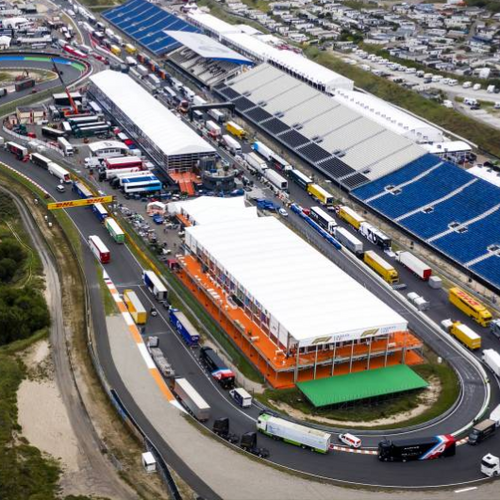
The Circuit Zandvoort brings together all things Dutch in a confluence of culture, heritage, and engine performance. Located just thirty kilometers from Amsterdam along the North Sea coast, the track is not just a venue for superb racing; it's an embedded cultural experience that invites participants to immerse themselves in the maritime history of the Netherlands. For those who adore the world of motorsport and want to watch it play out in real time, the living motorsport tradition at Circuit Zandvoort makes it an imperative stop on any European tour. And because memories of watching the race are worth way more than the price of admission, it follows that securing your spot at this historic track is a must.
In the following paragraphs, I will make clear why the Circuit Zandvoort deserves to be on every motorsport lover's wish list, why it's experience that can't be replicated, and why the fan-to-fan marketplace that is Ticombo is the best way to go about making that happen. In contrast to the uniform tracks that make up the modern Formula 1 calendar, Zandvoort offers elevation changes and a setting close to the sea that give the circuit a unique acoustic and visual character. These qualities sharpen driver concentration and amp up fan excitement. Since the Dutch Grand Prix's return in 2021, its stands have become pilgrimage sites for thousands of Dutch fans. A day at the Dutch Grand Prix becomes a kind of communal national event, with fans dressed in orange celebrating the engineering excellence that stretches from Vriesland to Zandvoort and the creation of high-speed automobiles that turns the cars driven by hometown hero Max Verstappen into winners. When the spiel begins as cars head out on track, the kind of intensity that gets drummed up makes any image of a national stadium seem like inadequate shorthand.
The motorsport and cultural festival coexistence emphasizes Zandvoort's now broadly recognized role as a Dutch leisure hub that puts on diverse events year-round. On a weekend in September, for example, the Dutch Grand Prix claims the coastal town's beaches and dunes for Formula 1 cars and their entourage. One might think this was the first time Zandvoort's coastal dunes had heard the deafening sound of F1 engines. They would be wrong — not only because the town hosted the Dutch GP in 1958, 1959, 1960, 1961, and 1962, but also since the sweet corn dunes next to this Formula 1 track in the making first became part of the International Automobile Federation's (FIA) official calendar in 1948.
Lap Record: Max Verstappen, 2021 Dutch Grand Prix, 1 min 11.046 sec (Mercedes‑W12).
Maximum Speed: On the circuit's main straight, vehicles regularly exceed 300 kph, while peak speeds in low-drag setups approach 330 kph. This figures alone illustrate why Zandvoort is a test of driver skill and a celebration of fan enthusiasm, preserving its status as a contemporary "purist's haven" in an era of motorsport where so many of its ancestors have faded from view.
100% Authentic Tickets with Buyer Protection
The verification process that culminates in the tickets' reaching you has at its core collaboration with the ticket office of the circuit itself. Every digital barcode is checked against the master list. Of even greater importance is what happens with hard copy tickets. They, too, are checked against the master list and are secure enough that some folks at local law enforcement have suggested that forgers hold off on any plans to do that thing they do. Indeed, the Circuit Zandvoort has an excellent reputation for integrity when it comes to its ticketing and ticket enforcement.
For those who prize physical tokens of their passion, it is a comforting thought that tickets will be delivered by premium courier services, arriving within 24 to 48 hours of purchase, in tamper-evident packaging that speaks to the importance of the item enclosed. It is one thing to send a ticket in the mail; it is quite another to do it right, ensuring that the ticket itself is not only a pass to an event, but also a collectible that might be valued even more highly after it has served its primary purpose. And yet, it serves another purpose as well: it gets the holder into the event for which they have paid.
These measures serve to reinforce Circuit Zandvoort's dedication to allowing everyone with a passion for motorsports to join in the experience. They ensure that the kind of structural disabilities faced by many individuals don't prevent them from enjoying all the elements of an event like this. The upgrades include accessible ramps and viewing areas that allow people in wheelchairs to enjoy the same intimate experiences that other fans enjoy from right up next to the track.
Circuit Zandvoort Seating Guide
Best seats at Circuit Zandvoort
For those in the port city of Zandvoort along the Dutch coast watching the race, picking the right chair is everything. Grandstands are located at strategic spots on this 4.3-kilometer bullring, a circuit that is all the rage right now among fans for its old-school concept of plucking corners off a nearby sand dune. This was the first iteration of the Dutch Grand Prix, and Verstappen won it. The sections are color-coded to show the differences between standard grandstand seats (green), premium hospitality packages (gold), and wheelchair-accessible zones (blue). The chart also indicates where the Paddock Club seats are located. The Paddock Club seats afford fans exclusive access to the pit lane, private lounges, and criminally good catering. In short, if you're able to afford the Paddock Club, do so.
For the audience to understand what they're seeing when they look at the chart, it's a good idea to first familiarize them with the section types and where they're located. They'll also want to know (and this is a question you should consider when looking at the chart) in what ways the Paddock Club is actually more exclusive than these other "premium" section types.
How to get to Circuit Zandvoort
The railway line from Schiphol Airport connects directly to Zandvoort, allowing travelers coming from abroad to easily transfer by train to the race. For the car-challenged, the combination of train and shuttle bus provides a rapid and reliable result.
Why Buy Circuit Zandvoort Tickets on Ticombo
Ticombo makes the ticket-buying process for motorsport fans not only secure but also completely straightforward. Their platform creates an increasingly rare win-win scenario for both buyers and sellers of all kinds of accessible tickets. For buyers, they are insulated from fraud, and if anything should go wrong, they have a direct and obvious path to recourse. For sellers, they are able to offer a transparent operation that gives potential buyers more confidence than they would have buying from, say, Craigslist. And for fans of motorsport and F1 who might be in Amsterdam in the near future, there's quite a few opportunities coming up where you could see some pretty exciting (and, honestly, pretty loud) spectacles.
Pricing is done according to the location of the seat, the kind of event, and any nearby hospitality service. For a standard seat in the grandstand, a spectator might expect to pay between €85 and €150. For a standard seat in the grandstand, a spectator might expect to pay between €85 and €150. At the same time, there are opportunities to pay much more and to enjoy the event from much nicer surroundings. The Paddock Club or a VIP hospitality package may cost between €350 and €850. On top of all this, what you end up paying can be affected by various market dynamics — how much demand there is at the moment, for instance, or what price the tickets are fetching in the secondary market. Ticombo, a ticket-selling platform, has pricing that is transparent enough to enable customers to make purchasing decisions in line with their budget.
To sum up, the Circuit Zandvoort stands as a remarkable motorsport host. It aligns with not just one, but several "pursuit of happiness" ideals — the scenic and the thrilling, the nostalgic and the innovative. The circuit's big picture is world-class vehicle competition, historical vehicles camped on site, and the chance for you to become part of this picture.
Seal of Excellence by EU Commission
Ticombo GmbH (parent company) is recognized under Horizon 2020, the EU's research and innovation funding program for its proposal No. 782393.
As seen on the news