
This event has happened.
You’re late, this event has expired already.
Al-Ettifaq FC vs Al Qadsiah FC Tickets
About Al-Ettifaq FC vs Al Qadsiah FC
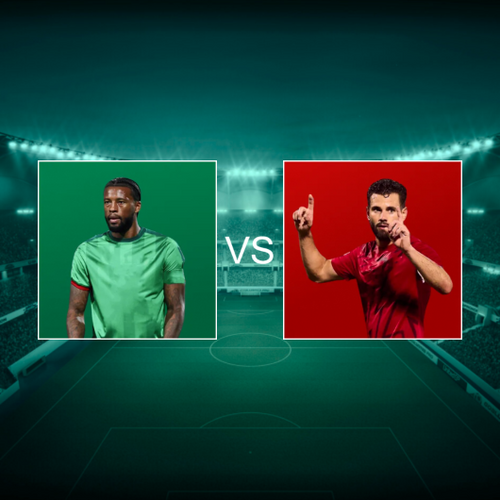
Tickets to Al-Ettifaq FC vs. Al-Qadsiah FC: Saudi Arabia's Pro League will see a charged matchup on April 2, 2026, between two teams teetering on the brink of relegation. The 2025–26 Saudi Pro League season has been tightly contested, with clubs separated by mere inches and seconds in games. Al-Ettifaq FC has been in a similar tough spot before. The 2007–08 season saw them, as now, flirting with relegation and fighting for every last point. So far, the club has managed to scrape together seven points, hovering over the trapdoor. Al-Qadsiah has matched their total, however, and with the two clubs set to tangle, the upcoming clash takes on the appearance of a prospectively decisive encounter — thin wedge driving, day of reckoning sort of stuff — that may determine the destiny of two clubs that have long been connected by geography, choice of color palette, and sometimes, the weirdness of football. The situation is therefore intensified: a win for either team ensures not just two hard-won league points but also serves as a knockout punch to the confidence of their opponents, dealing a potentially fatal blow that could serve as the domino effect of losing considerable momentum over the remaining league fixtures.
The numbers surrounding the recent confrontation underscore these high stakes. In their last ten contests against Al-Qadsiah, Al-Ettifaq holds a pronounced six-victory advantage to the good — certainly enough of a margin to allow Al-Ettifaq fans to revel (and not just the supporters) in the glow of a stretched-out historical argument when (and if) they ever feel in the mood for it. That is, of course, unless Al-Qadsiah happens to surprise everybody by pulling off a stunning draw. In the past, they have been known to ration out that particular counterpunch with much regularity.
When the two go head-to-head this week, each squad will do so with its most recent moves in the transfer market at the fore and fans hoping that this year's crop of acquisitions will pay off — big time — by the season's end.
Al-Ettifaq FC vs Al Qadsiah FC Rivalry History
Memorable Matches
The rivalry's early years were marked by scant attendance and inadequate media attention; the fixture drew limited interest because both clubs were mid-table teams and neither was fighting for any serious silverware. The results of the meetings vacillated as well, never pushing one club or the other toward establishing any real supremacy.
When Al-Ettifaq and Al-Qadsiah began their fixture in the 2010s, the stakes were raised in their burgeoning competitive rivalry because each team had risen to a much more solid mid-table position. Al-Ettifaq's cup-contention aspirations added to Al-Qadsiah fighting for a stable top-half position. In the post-2010 years, they did real tactical battle for an ever-increasing share of the spoils of a half-decent mid-table position — this time without one club or the other being the wheat that has to fall to the ground.
In recent years, the encounter between the two clubs has grown to an almost fevered intensity. While both clubs are not presently in any kind of position to be threatening the historically "Big Four," they've taken everything that separates a neat mid-table position from even some Relegation-Clash drama with an "Up/Down" button that pushes out one club or the other in respect to the persistent narrative of games that matter. The rivalry between Al-Ettifaq and Al-Qadsiah is fueled by unforgettable events. When the teams met in 2020, the referees wound up at the center of attention. Their disallowing of an Al-Ettifaq goal (due to a highly suspect offsides call) was the main reason figures in the media and soccer fans alike were debating the match's outcome for days afterward. Some saw the two clubs as near equals and praised the level of play in the matches. Others questioned whether Al-Qadsiah should have had the right to call themselves champions.
Players who represented both clubs
A number of players, including those on the postseason roster, have represented both clubs, giving the games another layer of tension and intrigue. Al-Muwallad's skill hasn't only reconciled the clubs' tactical differences but has also connected the fans to what kind of player he is. Both fans and players eschew the appearance of a meeting of understudies, for when this fixture comes around, they all know that the rivalry's history will be invoked. Al-Muwallad didn't just defect for more money; he went to a club that stands in opposition. What happened was grounds for treason. The fans will always argue it out, the tabloids will run with it, and the players involved will either have to own up to it or pack up and leave.
For the past 30 years, the two teams have represented an embodied opposition in the rivalry of Al-Ittihad (The Union) and Al-Hilal (The Crescent). No other club has beaten Hilal as much as Al-Ittihad, and no other club has been seen as much of an enemy as Al-Ittihad. Hence, going to a game is not just a passive presence in the stands; it's an active, immersive experience in the living art of sports and community. The audience is part of the work of sports art that goes on within the walls of a sports venue; they're a living mural of the community coming together to triumph as onlookers. Community is identity. When people show up to games, they identify with that "thing" that makes this "community" unique. They may show up because that's the way their family has always done things, or because that's what people around them do, or because they're part of a chain of events that lead them to be in the stands at that particular moment in time.
Witness this epic rivalry live!
The 22,042-person capacity of the stadium forms a balanced environment of intimacy and grandeur, bringing fans close to the on-field action while still accommodating a vast supporter base. The stadium embodies several key attributes:
Sightline Quality: Every seat in the house offers an unobstructed view of the action, with a steeped slope that enhances the visual angle for spectators. Fans are part of a domed experience, with an average direct-view angle of 30 degrees as the vertical diversion from the pitch, making it visual fatigue–reducing and bringing the audience into a semi-circular virtual reality of what's happening on the field.
Acoustic Design: The exterior of the stadium has a concave contour that amplifies the sound of the crowd. An away team would find the environment quite imposing and even frightening. It's the endless prospect, with the memory of what's happened and the spell of what's currently unfolding, that home teams inhabit with fans which infinitely extends far greater than the playoff potentials or lack thereof.
The stadium is building toward something awesome.
- Facilities: There are modern concession stands, restrooms, and spaces for other amenities. You order a beer, and you can pay with your phone or with cold, hard cash. Aligning with one's own preferences should be the first step when selecting a seat in a stadium. Fans who like to analyze the game might choose a vantage point from mid-tier seats. Those who just want to be right in the middle of the action might like the general admission experience. And where is the stadium, exactly? Prince Mohammad Bin Fahd Stadium, in Dammam, is the home turf for the Saudi team Al-Ettifaq.
100% Authentic Tickets with Buyer Protection
Authentic Tickets Guaranteed
The workflow for ticket verification begins with the seller's registration, moves through the digital fingerprinting of e-tickets, and, in the case of paper tickets, eventuates in a physical inspection of the tickets. Yet only when these processes clear successfully does the listing become visible on the marketplace. The buyer, when he receives his digital ticket, also is issued a certificate of authenticity that is digitally signed, which he presents at the entrance gate. In the exceedingly unlikely event of what's called "a gate discrepancy," remediation protocols bind the platform to make the buyer either whole or whole again.
Secure Transactions
The ticket-buying process breaks down into several steps that this section will illuminate. Each of these steps introduces a small risk to the buyer. However, since the sellers are onboarded by the platform and since the platform is responsible for the ticket verification process, those risks fall mainly under the platform's purview. There are several reasons to buy tickets early:
- Seat Selection: If you buy weeks ahead of the event, you vastly improve your chances of getting the kind of seats you want, particularly in areas where space is limited. That's because the event's promoter typically holds back a large portion of those "premium" seats from the initial public on-sale and releases them in closer-to-the-day-of-the-event tranches, which come along with a "sold-out" trumpeting that actually means "we have these seats for sale, but we're holding back some for our own use and redistribution."
- Price Stability: Related to the above, if you buy well in advance, you're usually looking at paying close to face value. If you wait until the event is nearly upon us, you're likely to pay a lot more for your seats, particularly if the demand for those seats is high. The secondary and tertiary markets capitalize on this. The recent hat-trick by Retegui against Al-Kholood highlights his relentless pursuit of goals, and so far, his runs have opened up defenses, allowing the team a 78 percent success rate in reaching the final third. Both clubs, however, are living with the knowledge that any kind of mistake — especially defensive — will be costly in the current environment. That has forced this meeting to take on the feel of a kind of really dangerous chess match, with both sides hoping to avoid the kinds of mental mistakes that might allow the other team to get too far ahead. And at the same time, the matchup feels alive with possibilities for either side. Either of these two teams could explode on the other at any moment.
Intermediate Seating Prices: Tickets range from SAR a0250 to SAR a0450.
General Admission Prices: Tickets range from SAR a0120 to SAR a0250.
These figures reflect the base ticket price and do not include the service fees and insurance option that will be added at checkout.
Ticombo's platform allows ticket price to fluctuate in real time, and it ensures that users see the current price first. "We are absolutely loyal to the ticker price you see first," says Ticombo co-founder and CEO Sebastian Batterink. "We don't try to lull people into a sense of security that they are seeing a cheaper price than they actually are." All matches, including those featuring historic rivals, simulate real market conditions. Ticombo's website prominently displays the number of tickets available for any given match as well as the seating chart for the stadium. Supporters secure their investments with tickets purchased through the platform Ticombo, which assures fans of its authenticity and rapidity of delivery. Once inside the stadium, those ticket holders undoubtedly have an experience that they might describe as a simulacrum of being inside a robust theatrical performance. Purists may argue that while they are sitting in the stands, they are active participants in what might be better described as a symphony of emotions. For them, an event can mean anything to anyone at any particular time.
Seal of Excellence by EU Commission
Ticombo GmbH (parent company) is recognized under Horizon 2020, the EU's research and innovation funding program for its proposal No. 782393.