
This event has happened.
You’re late, this event has expired already.
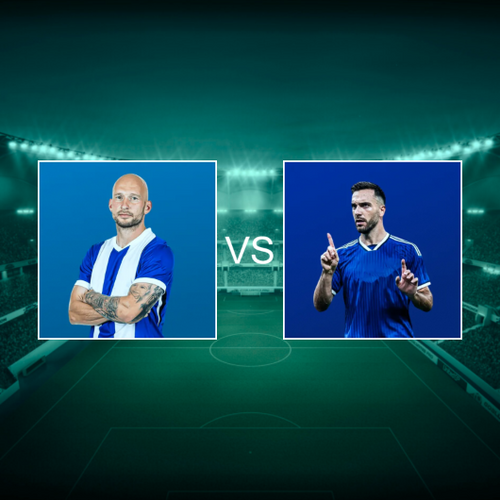
Hertha BSC vs FC Schalke 04 Tickets
About Hertha BSC vs FC Schalke 04
The upcoming game between Hertha BSC and FC Schalke 04 is more than just a second-division match. Both clubs, with their long, illustrious histories in German sport, are now in the 2. Bundesliga after short, recent stints in the top tier. Hertha, long dubbed "The Old Lady," has become the cosmopolitan Berlin club. Schalke, despite being the leading 2. Bundesliga club that came closest to the borders of Prussia, and indeed, because of this, has long had the reputation of being the most firmly rooted club in the Club Triangle of the Revierderby (a club triangle that includes not only rivals Schalke and Borussia but also Leverkusen) in the Ruhr region, the coal and steel heart of Germany. Both clubs being in the second division has reignited a rivalry that was once a weekly highlight of the first division and brings a matchup that is as much about regional pride as it is about points. The rivalry between Hertha BSC and FC Schalke 04 has continued for over a century and has encompassed more than 150 meetings across various formats: the Oberliga, the Bundesliga, and, more recently, the 2. Bundesliga. Without exception, the two teams have been this division's marquee sides. The most recent meeting between the two, a 1-1 draw during the 2024-25 season, only served to heighten the stakes: both sides had previously been in earshot of promotion and, in the wake of that draw, remained so.
With two remarkably different cities as their cultural bases, Hertha's Berlin and Schalke's Gelsenkirchen, the rivalry could hardly be more intensified. Berlin, as the heart of Germany, largely projects an image of openness, artistic vibrancy, and a diversified demographic, just as it has done for decades. Gelsenkirchen, meanwhile, is a messy, blue-collar, industrial powerhouse, where unity and community still mean something and, not to mention, are the very sorts of places that the Berlin of the imagination isn't.
Hertha BSC vs FC Schalke 04 Rivalry History
Of all the encounters that exist, two stand out for their drama and everlasting impact. The first is the game on June 10, 2001, where Schalke won an extraordinary 5-3 over Hertha. The eight-goal affair was a display of audacious attacking football, as well as its defensive virtues (or in this case, the lack thereof) because of the ostensibly relentless series of forward jabs that both sides exchanged for most of the game. Schalke's attacking force, spearheaded by Danish striker Ebbe Sand, might seem to have put in the iconic performance of the match until one realizes just how much of their play was actually set up by the midfield work of Brazilian "number 10" Lincoln. On a night where the artist from São Leopoldo left his imprint on the game with two assists, as well as a stunning goal from a 20-yard free-kick, it seems only fair to at least nod in his direction too.
Memorable Matches
The 2001 match is a standout high-scoring game full of drama and attacking football, showcasing both skill and endurance from the teams.
Players who represented both clubs
It is not at all common for players to move back and forth between the two teams. If you think about the teams and their histories, then you can also understand why such a transfer is a rarity. The teams are very close in terms of styles and philosophies. Additionally, it's often the norm for fans to be hugely devoted to their clubs, which makes moving from one team to the other a bit politically risky, although when the exchange does occur, you're likely to see it on the front pages, and you're also likely to hear about the amount of dough involved. Additionally, the rarity of such moves gives emotional heft to each encounter and reminds supporters that the rivalry extends beyond the pitch into the very personal lives of the athletes themselves.
Witness this epic rivalry live!
Fans can experience this long-standing Hertha BSC vs. FC Schalke 04 rivalry in its purest form by attending face-to-face. The Hertha ultras alone can fill half the stadium and inject a frenzied energy into proceedings with their impressive choreography. Meanwhile, the TV announcers can't seem to get enough of depicting the fans from both sides as crazy. There's something almost archaic about this kind of fandom, but it's immensely comforting; no one in these stands gives a flying fig about you unless you're standing with them. And since everyone is standing, the actual, stationary figures of the fans seem to blend into the moving figures within the murals. Any devotee to football, especially German football, will find a seat within its confines to be unquestionably a front-row space in this amphitheater of pride and local hubris, a place where joy and sadness in equal measure play their own number. You can actually hear the players kick the ball, either with intent and precision or with a noticeable limp when dribbling, as we saw with Mesut Özil in 2008 when an old knee problem reared its ugly head.
100% Authentic Tickets with Buyer Protection
The platform's customer service team is active 24/7 and is prepared to handle any problems and help resolve them as quickly as possible. That makes much more sense when the acquisition of many popular tickets is also a race against time. After all, a clock is always ticking somewhere. Unlike some traditional ticket outlets, Ticombo doesn't just serve as a go-between for buyers and sellers. It vaunts a more transparent and even-handed mandate. Who did we verify when we bought the ticket? If it was an individual, then we don't have to worry about the legality of what we did. Unlike a numbers-matching game, which always has the odds in favor of the house, attending sporting events shouldn't be an exercise in ticketing chicanery — one that's confident in its tricks not being reversible.
Olympiastadion Berlin Information
After Germany reunified and the nation successfully bid to host the 2006 FIFA World Cup, the Olympiastadion went through intensive modernization that preserved its history while bringing it into the present. Watching a game inside a stadium that bespeaks such history and monumental architects is, alone, an incentive for the average person to visit. Yet, after the renovations, Olympiastadion retained its unique signature. It was and still is unlike any other stadium. The focal point of Berlin's Olympic Park, Olympiastadion taps both the energy and the imagination of its fans and of the city itself.
Olympiastadion Berlin Seating Guide
The seating arrangement in the Olympiastadion serves all ideas of comfort — personal, cocooned, luxury, and cover-seeking. Yet, the fans? "Ultras," in modern parlance, are those who sit right behind the goals and deliver the roar. They find themselves in good company because those on the other side of the field help create the cauldron-like environment that makes the German Animals growl. Hearing and sitting in the midst of that din alone is an experience to remember. VIP and executive boxes offer deluxe experiences, with better services, private dining, and access to exclusive lounges. These areas in the premium sector, along with a limited number of special suites, command top prices. Choosing a seat comes down to considering what's most important: being immersed in the energy of an on-fire crowd or having a premium vantage point that allows one to see all or almost all of the field and "red zone" moments. In either case, Olympiastadion is acoustically engineered to make sure even the man and woman in the most outlying seats are part of the collective "Oh!" and "Ah!" moments and can hear the sonorous Olympic Legend PA voice in the few minutes before the event begins and at halftime.
How to get to Olympiastadion Berlin
The Olympiastadion Berlin is accessible mainly through Berlin's extensive public transport network, served by the S-Bahn (suburban rail) and the U-Bahn (underground metro), which emphasize efficiency and environmental sustainability. With stations in front and on the side, fans coming from the city center will get there in no time. On match days, when many fans are converging on one point, these services' frequencies are increased, with trains coming through the nearest stations every few minutes. For alternative means of transportation, there are always bicycles and (a limited number of) cars, which park not far from the stadium. As a result, most clubs, fan organizations, and city planners highly recommend using public transport. They suggest it as the best defense against incapable road systems, seeing it as capable of gear for large-scale events like sporting matches.
Why Buy Hertha BSC vs FC Schalke 04 Tickets on Ticombo
Ticombo ensures that by the time its tickets are delivered to buyers, they have passed through multiple checks for authenticity — checks that include barcode validation, serial number verification, and real-time cross-referencing with club databases. Any ticket detected as fraudulent is immediately pulled from circulation. Even better, Ticombo's use of the sky-high, sun-powered symbol that is the SSL (or "Secure Sockets Layer") ensures that fans' private payment information is just that: private. And even better still, Ticombo's use of an escrow account ensures that fans using the service might as well be dealing with Hertha's ticket office. That's because by the time the fans' money is cleared and in the hands of a seller, the event has long since ended and the fans who were held in escrow during the interval have been given their money back.
Fast Delivery Options
Ticombo addresses the multitude of modern consumer preferences with a variety of delivery methods that cater to both immediacy and convenience. The zero-hassle option of a digital e-ticket is sent to you not more than 30 seconds after your purchase is confirmed, and it exists on your Ticombo account right after that. You're able to download the ticket to your mobile phone, if you'd like, to gain entrance to the event. If you are a Luddite (like the author at times), then you can choose the platform's other delivery method: good old physical mail. In this case, your order dynamically converts into an envelope in a mail truck, which brings your stuff to you, and you get your stuff typically in about two or three days after the order has been placed (which, from this Luddite's obscured point of view, holds almost the same essence as receiving instant mail).
When to buy Hertha BSC vs FC Schalke 04 tickets?
Potential buyers should pay attention to club news, league standings, and ticket listings on Ticombo's platform and act swiftly to secure the seats they want at a price that's good for them before the market tightens. Prospective buyers should start by heading to Ticombo's exclusive football section. Under "Sports Tickets," choose "Football," then a further 2. Bundesliga subsection. From there, the fixture desired should be singled out for review.
Once selected, the events from each fixture are presented in a list with each ticket sporting a verification badge for authenticity. The standard process then moves to a secure checkout, where the buyer's payment information is entered. The purchaser next decides whether ticket delivery will be instant and electronic or — in the old-school Ticombo way — via a mail carrier.
After a transaction is completed, an order confirmation is sent. Ticket access then results from either obtaining a downloadable QR code or a parcel (with tracking).
FC Schalke 04 Home Fixtures
FC Schalke 04's home field is the Veltins-Arena located in Gelsenkirchen, Germany. The stadium is famous for its retractable roof and leading-edge technology that enhances the fan experience. It is one of the most modern soccer venues in the world.
Frequently Asked Questions
Are Hertha BSC vs FC Schalke 04 tickets transferable?
Tickets purchased through Ticombo can be transferred provided they are within the competition's regulations. It's necessary to check the specifics of the regulations of the clubs on their official website. Handover of the tickets should not affect the valid entry to the event. Ticombo's support team is also available to walk new buyers through the specifics of a safe and secure transfer of the ticket that will not affect the original buyer's valid entry to the event.
Seal of Excellence by EU Commission
Ticombo GmbH (parent company) is recognized under Horizon 2020, the EU's research and innovation funding program for its proposal No. 782393.
As seen on the news