

Formula 1 Tickets
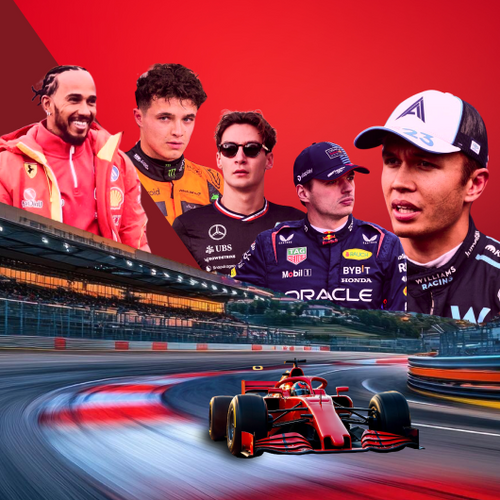
Formula 1 Tickets get you trackside for the biggest shift in F1 rules in a generation. The 2026 Formula 1 season marks the beginning of a new era — new engines, new chassis, new tyres, new fuel and active aero — and it's flipped the grid upside down. Andrea Kimi Antonelli heads the championship for Mercedes in only his second full season, Lando Norris sits fourth in the hunt for the title he won in 2025, and Max Verstappen is sixth as Red Bull endure their worst campaign in years. New teams Audi and Cadillac join the competition.
Formula 1 Tickets are on sale for all remaining rounds. Every purchase comes with guaranteed tickets and 100% buyer protection.
Formula 1 Championship Info
Formula 1 is the pinnacle of single-seater motorsport and the most-watched annual sporting series in the world. It features a multi-race championship over the course of a calendar year, and drivers and manufacturers compete separately for their own titles.
Points are scored in the top ten of every race and the championship consists of a number of Grands Prix throughout the season. A Formula 1 Grand Prix weekend takes place over three days: Friday includes two practice sessions, Saturday is dedicated to a third practice session and qualifying, while Sunday is race day. For six rounds this year, a special 'sprint' format takes place where a race takes place on Saturday and points are awarded based on the results of that race. That sprint race is preceded by a special sprint qualifying session to determine the starting order.
Sprint races mean you can get a lot more action if you buy a Saturday ticket. Most tracks sell both weekend passes for all three days, and single-day entry tickets. Buying a ticket for the Saturday of a sprint round gets you much more racing than the same day at a standard Grand Prix.
Formula 1 History
The World Championship was established in 1950 at Silverstone in the UK. Michael Schumacher and Lewis Hamilton are joint record-holders with seven drivers' titles each, though Hamilton also owns the record for the most individual race wins. Ferrari have been competing in every season since its inception and are the most successful team in the history of Formula 1.
Mercedes dominated the past decade, from 2014-2021, until Max Verstappen and Red Bull took over, but it's now back to McLaren. Lando Norris won his first drivers' championship in 2025, beating Verstappen by two points after a thrilling finale in Abu Dhabi.
New rules for 2026 were introduced with the aim of ending exactly this kind of dominance, and the early results suggest the changes have worked. The order at the beginning of this season looks little like the end of the last one.
The 2026 Formula 1 Season
It's the first year under Formula 1's new rulebook. Power units use fully sustainable fuel and draw a higher proportion of power from their electrical components. Cars are lighter and narrower, and drivers can adjust their front and rear wings dynamically as they move between the straights and the corners.
The impact has been striking. Mercedes looked the best-prepared heading into the new regulations, and they've led both championships since the season started. Andrea Kimi Antonelli has won multiple races this season and holds a strong lead in the drivers' standings, with George Russell and Lewis Hamilton not far behind. Ferrari sit second in the constructors' table, in front of McLaren.
Red Bull have struggled the most. Max Verstappen is a long way off the top five, and the squad that secured four successive drivers' world championships is now chasing the field. His new team-mate is Isack Hadjar.
There are two newcomers too. Audi have taken over the Sauber entry, and Cadillac have arrived as the 11th team with Sergio Pérez and Valtteri Bottas. The calendar started as 24 races, but Bahrain and Saudi Arabia were dropped.
How To Buy Formula 1 Tickets
Buying F1 tickets is confusing. The biggest error fans make is getting the ticket category wrong.
| Ticket type | What it covers |
|---|---|
| Weekend pass | Friday, Saturday and Sunday |
| Day ticket | One day only; Sunday is priciest, Friday is cheapest |
| General admission | Unreserved standing areas or grass banking; no seat; move freely |
| Grandstand | A specific seat in a specific stand; view depends on the location |
| Paddock Club | Premium hospitality above the pit garages; access to pit lane; catering included |
The key decision when purchasing F1 tickets is selecting your grandstand. Those on the main straight see the start, pit lane and podium, but a passing car only gets a glimpse every few seconds. Corners are a different story; you get much more racing and usually more overtaking, but there is no start or podium atmosphere. The seats at Turn 1 are generally the costliest because that is where races are often settled.
The cheapest option is general admission. At some tracks, such as Spa, Austria and Zandvoort, that means better views than the mid-price grandstands. On flat city tracks, however, it is barely worthwhile.
Experience Formula 1 Racing First-Hand
Watching Formula 1 on TV is one thing. Seeing it in person is another experience entirely. Television removes all sense of pace and sound. The first time you hear a Formula 1 car coming up behind you and then go past, you will be genuinely startled — and the closer you are to the barrier, the more so.
You need to remember that it's not just an afternoon. You're there from Friday to Sunday. Friday is when practice takes place. It's the cheapest day, and you can take plenty of photos, stroll the track and wander about. Saturday is qualifying, which for most seasoned attendees is the most thrilling hour of the whole trip. Sunday is the race. There's the crowd, the podium, and the noise.
Formula 1 has some extraordinary circuits, and they're all very different as spectator experiences. Spa-Francorchamps and the Red Bull Ring are beautiful, natural amphitheatres where general admission works well. Monaco, Singapore and Las Vegas are street circuits where the location is the reason to visit, and grandstands are a must. Silverstone, Zandvoort and Monza are the ones where you'll see the biggest, most loyal crowds.
Get Your Formula 1 Tickets With Confidence
We verify each and every listing before making it available on our website. We hold your money until we've verified the ticket has been successfully delivered. If there are any issues with the tickets – they haven't been delivered, they aren't as described in the listing, or a session is cancelled – your purchase is covered by our buyer protection guarantee.
With Formula 1, there are additional things to consider when making a purchase. These tickets aren't sold centrally by the sport – they're sold by individual circuit promoters. That means eleven different sales systems, currencies, refund policies and languages across a season. Some promoters release tickets more than a year ahead, and the most popular rounds sell out within days.
There is also the categorisation problem. Grandstand names, numbers and letters differ at every circuit and mean nothing without a seating map. A stand described as premium at one venue may be a distant corner at another. Always check the specific stand against a circuit map before buying, not the price alone.
Weather is not a refund event. Formula 1 races run in the rain, and a race is only abandoned in extreme circumstances. Grandstands are frequently uncovered.
Formula 1 Ticket Prices
Prices vary more between races than in any other sport, driven by the promoter, the country and the demand for that particular round. General admission is the entry point and the best value. At European circuits with good terrain, a three-day general admission pass can cost less than a single day's grandstand seat and give you access to multiple viewing areas across the weekend.
Grandstand pricing runs across a wide band. Corner stands at less-subscribed rounds are the accessible end. Main straight and first corner stands at the biggest races sit at the top, and the gap between the cheapest and most expensive grandstand at a single circuit can be several times over.
The premium rounds are a market of their own. Monaco, Las Vegas, Silverstone, Monza and Zandvoort consistently command the highest prices, and Monaco in particular functions more like a hospitality event than a race ticket. Paddock Club sits above all of it, typically several times the cost of the best grandstand seat, with pit lane walks, garage tours and full catering included.
When to Buy Formula 1 Tickets
The calendar for the following season is usually confirmed in the middle of the current one, and circuit promoters open sales at very different times. Some go on sale twelve months ahead; others wait until a few months before.
For Monaco, Silverstone, Monza, Zandvoort and Las Vegas, buy as early as possible. Those rounds sell out well in advance and prices only rise. Home-nation demand is the driver — Silverstone and Zandvoort in particular move quickly the moment sales open.
For the remaining rounds of the current season, the picture is different. With the championship live and Mercedes and Ferrari fighting at the front, late-season races carry more weight than usual, and demand for the final rounds will build as the title picture narrows. For less-subscribed rounds, there is genuine flexibility, and both grandstand and general admission tickets are often available in the final weeks.
One practical note: accommodation near most circuits is limited and prices multiply on race weekend. Book the hotel at the same time as the ticket, particularly for Monaco, Spa, Monza and the Red Bull Ring, where nearby towns are small.
Latest Formula 1 News
After the summer break, racing returned at Zandvoort, one of this year's six sprint weekends alongside Shanghai, Miami, Montreal, Silverstone and Singapore.
Mercedes' Andrea Kimi Antonelli heads the drivers' championship in a breakthrough season with the team, having scored wins at multiple rounds in the opening half of the year. He is followed by Mercedes team-mate George Russell and Ferrari's Lewis Hamilton, while Mercedes are far ahead of Ferrari in the constructors' standings.
Lando Norris won the Hungarian Grand Prix for McLaren prior to the mid-year break. Red Bull's Max Verstappen is not even in the top five, over a hundred points off the championship lead, as the team continues to have issues adjusting to the new regulations.
The field has grown this year with Audi inheriting the Sauber squad, and Cadillac joining as a fresh team with Sergio Pérez and Valtteri Bottas. However, with the Bahrain and Saudi Arabian Grands Prix off the schedule, the season has dropped from a projected 24 rounds to 22.
FAQs
How much do Formula 1 tickets cost?
There is a lot of variation in price between rounds. Cheapest of all are general admission tickets, which can cost less for the whole weekend than a single day in a grandstand. Grandstand prices cover a broad range, depending on the stand and circuit, and Monaco, Las Vegas, Silverstone, Monza and Zandvoort are generally the most costly events.
What's the difference between a grandstand ticket and general admission?
General admission allows you to stand in certain designated viewing spots that are not reserved seats, so you can move freely around the circuit but don't have a fixed spot. A grandstand ticket is for a reserved seat in a particular stand, and the view will depend on where that stand is on the track.
Should I get a 3-day ticket or a 1-day ticket?
Weekend passes, valid from Friday's practice sessions through to Sunday's race, are normally cheaper per session than buying single-day tickets. Most circuits offer single-day tickets, which tend to be most expensive on Sunday and least expensive on Friday.
What is a sprint weekend?
Six races this season feature a sprint, replacing one practice session with a shorter race on Saturday that awards championship points and comes after its own qualifying session. The sprint races take place at Shanghai, Miami, Montreal, Silverstone, Zandvoort and Singapore.
Who is currently leading the 2026 Formula 1 championship?
Mercedes driver Andrea Kimi Antonelli tops the drivers' standings, ahead of his team-mate George Russell and Ferrari's Lewis Hamilton. Mercedes also lead the constructors' championship, ahead of Ferrari and McLaren.
Why are the 2026 cars so different?
The 2026 season introduces a brand-new set of technical regulations governing the engines, chassis, tyres and fuel. The cars are smaller and lighter, and the power units are powered by sustainable fuel with a higher percentage of electricity. There is also active aerodynamics, allowing the wings to be changed during the lap.
How many races are there in the 2026 season?
The season features 22 races. The original schedule included 24 rounds, but the Bahrain and Saudi Arabian Grands Prix were removed.
Do Formula 1 races take place if it rains?
Races usually continue in wet conditions and are only suspended under extreme circumstances. Many grandstands are uncovered, so you should bring waterproofs as you will not receive a refund.
Other tournaments and competitions
- NFL International Games Tickets
- Australian Open Tickets
- US Open Tickets
- Wimbledon Tickets
- Nitto ATP Finals Tickets
- Rolex Paris Masters Tickets
- Mutua Madrid Open Tickets
- Queen's Club Championships Tickets
- 6 Kings Slam Tickets
- The Open Championship Tickets
- Royal Ascot Tickets
- Cheltenham Festival Tickets
- Men's Rugby World Cup 2027 Tickets
- Men's Six Nations Tickets
- Summer Games 2028 Tickets
- Asian Games Tickets
- Champions League Tickets
- Premier League Tickets
- La Liga Tickets
- Serie A Tickets
Seal of Excellence by EU Commission
Ticombo GmbH (parent company) is recognized under Horizon 2020, the EU's research and innovation funding program for its proposal No. 782393.